
We've all done it. Set a goal with real conviction (to get fitter, finally tackle that project, change how you lead) and watched it quietly evaporate a few weeks later.
Why? Was it that you didn't want it enough? Or was something else missing?
A Model With a Gap
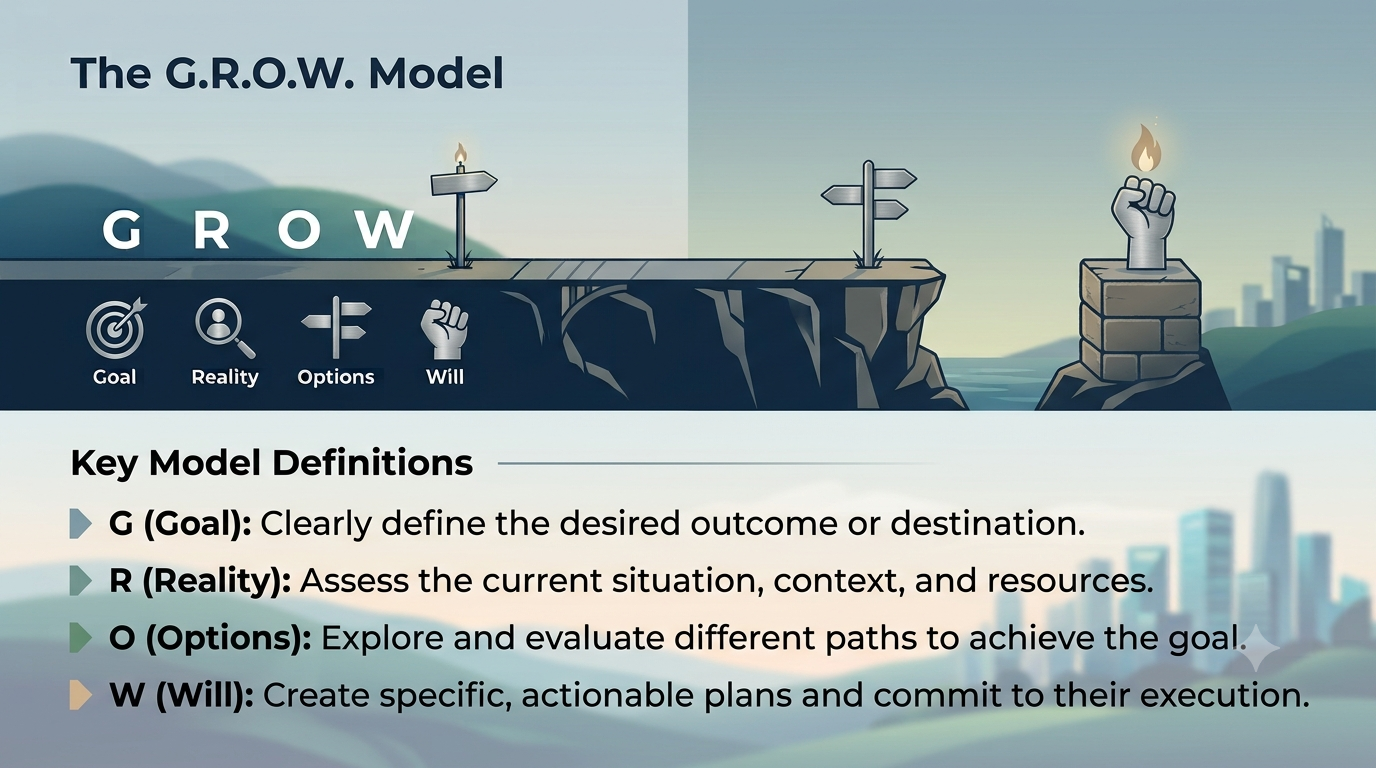
The GROW model has been a coaching staple for decades: Goal, Reality, Options, Will. It's a good framework, and it works really well. But in years of coaching people through exactly this process, I kept seeing the same thing: people with a clear goal, an honest view of their current reality, and a solid plan, who still didn't follow through.
Clarity wasn't the problem. So what was?
That's why I add a fifth letter: S, for Support. GROWS. It's usually the one letter that decides whether a goal sticks or gets parked as the many demands of a busy life take over.
Five Places Goals Quietly Fail
Not every goal fails for the same reason, but here's where I see it happen most:
Motivation — You never really wanted it. Not in the way that matters. If a goal isn't connected to something you actually care about, willpower alone won't carry you there. Ask yourself: is this goal actually mine, or is it something I think I should want?
Self-efficacy — You don't believe in yourself. There's a fine line between a stretch goal and a hopeless one. However, Bandura's research on self-efficacy shows us that belief that you can do something predicts whether you try nearly as much as the goal itself does. Where does your confidence genuinely sit? Visualising yourself achieving the goal is a proven help in ensuring you believe in yourself.
Planning — You have willpower, but no plan. Intent isn't a strategy. What happens on the day motivation dips? You need a system in place so your actions and behaviours become habits, not a day to day choice.
Capacity — You don't have the time, and you know it. This is the one people admit to least and feel most. If a goal needs two extra hours a week you don't currently have, something else has to give. What are you spending time on that is less important to you than your goal?
Support — You're doing this alone. This is the one that gets skipped most often and it's usually the one that matters most. Support doesn't mean announcing your goal to everyone, but having someone who knows what you're trying to do and can provide you with feedback is important (Locke and Latham, 1991). Who is that person for you right now? If the honest answer is no one, that might be your real gap.
Ready to Showcase Your Training Expertise?
Join our marketplace and connect with organizations actively seeking training solutions. Showcase your expertise and grow your training business with qualified leads.