
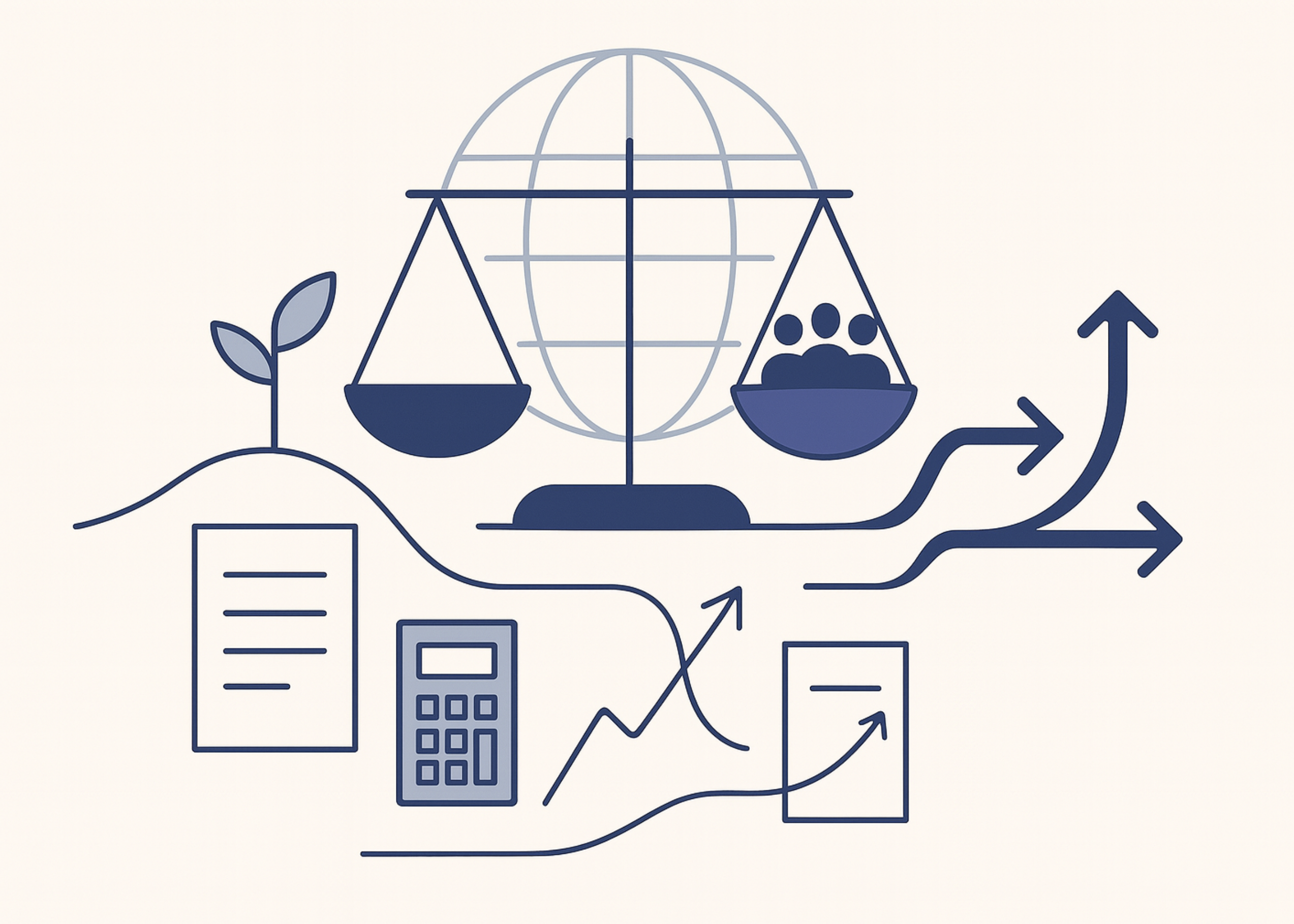
Accounting is often called “the language of business,” and in today’s world it speaks not only to profit but to sustainability and long-term strategy. Far from being a back-office recordkeeping function, modern accounting plays a pivotal role in guiding companies toward sustainable business practices and informed strategic decisions. In this part of our Accounting Training series, we’ll explore how effective accounting practices contribute to both business sustainability and high-level decision-making.
Beyond the Books: Accountants as Strategic Partners
Gone are the days when accountants were seen merely as number crunchers. Today’s accounting professionals are strategic partners in the business, providing critical insights that shape the company’s direction. In many organizations, the finance team is deeply involved in strategic planning, using financial data to evaluate options and recommend courses of action. Accountants’ understanding of costs, revenues, and risk equips them to advise on key decisions like market expansion, pricing strategies, or capital investments. For example, management accountants might perform scenario analyses to help leaders decide whether to launch a new product line or enter a new region. By forecasting outcomes and identifying financial risks and opportunities, accountants ensure that strategy is grounded in solid analysis.
Research reinforces this evolving role. Modern accountants are increasingly seen not just as compliance operators but as key strategic advisors who bring a wealth of knowledge to the decision-making table . They help steer businesses toward long-term viability, aligning financial goals with ethical, sustainable operations . Real-world case studies illustrate this impact: in one instance, a manufacturing firm facing profit pressure worked with its accounting advisors to streamline operations. The accountants identified inefficiencies in the supply chain and proposed cost-saving measures. The result was a significant reduction in costs and a healthier bottom line . In another case, a tech company’s finance team used detailed cost-benefit analysis to guide a successful expansion into new markets, resulting in 50% revenue growth over two years . These examples underscore how strategic accounting insight drives better business outcomes.
Accounting’s Role in Business Sustainability
“Sustainability” in business refers to operating in a way that is environmentally sound, socially responsible, and economically viable for the long term. Accounting plays a crucial role in sustainability by measuring and reporting on these broader performance indicators. Today’s accountants don’t just track dollars – they also help track a company’s environmental and social impact. This is evident in the rise of sustainability accounting and ESG (Environmental, Social, Governance) reporting. In fact, as of 2023, 90% of S&P 500 companies publish ESG or sustainability reports , reflecting how mainstream this practice has become. Accountants are typically the ones compiling and verifying these reports, ensuring that data on carbon emissions, resource usage, or community investment is as reliable as financial data.
By integrating sustainability metrics into management accounting, companies can get a balanced view of performance that combines financial results with environmental and social responsibilities . For instance, an accountant might help quantify the cost savings of an energy-efficiency initiative or the long-term financial risks of ignoring climate change. This information is vital for strategic decision-making: leadership can weigh short-term profits against long-term sustainability goals. Increasingly, regulators and investors demand such transparency. New reporting frameworks (like the EU’s Corporate Sustainability Reporting Directive) are expanding mandatory ESG disclosures to tens of thousands of companies, pushing sustainability reporting from a niche activity to a standard business practice .
Accountants facilitate sustainability by embedding it into business plans. They develop “triple bottom line” accounting approaches that consider profit, people, and planet together. For example, an accountant might create an internal report showing how a proposed factory upgrade will reduce carbon emissions and save on energy costs over time, strengthening the business case for the project. By putting hard numbers on sustainable initiatives, accounting turns abstract ideals into actionable strategy. Research shows this pays off: companies that actively manage and report sustainability often see improved financial performance through enhanced reputation, reduced risks, and even increased revenue . In short, good accounting can illuminate the path to doing well and doing good.
Enabling Data-Driven Decision-Making
At its heart, accounting provides the data infrastructure for decision-making. Strategic choices – whether to invest in a new venture, cut costs, or pivot business models – require a foundation of accurate financial information. Accountants ensure that foundation is solid. They deliver timely financial reports and analysis that help executives understand the company’s health and the potential outcomes of decisions. When evaluating a strategic move (like acquiring a competitor or launching an expensive marketing campaign), leaders rely on accounting data such as projected cash flows, break-even analyses, and risk assessments. Accounting frameworks like capital budgeting (e.g. calculating net present value or internal rate of return) directly inform whether projects are approved or shelved.
Crucially, accountants also help manage risk in decision-making. By conducting financial simulations and stress tests, they show how sensitive a plan is to changes in interest rates, commodity prices, or other variables. This prepares decision-makers with contingency plans. For instance, before a big expansion, the finance team might model best-case, expected, and worst-case financial scenarios. If the worst-case scenario threatens the company’s stability, executives can modify the strategy or build up reserves. Thus, accounting injects a healthy dose of realism into strategic planning, balancing optimism with analytical rigour.
Moreover, accounting fosters strategic discipline through budgeting and performance monitoring. Once a strategy is set, management accountants break it into budgets and KPIs (key performance indicators). They then track actual results vs. targets, providing feedback that helps leaders adjust tactics promptly. If a company’s strategy is to improve profit margins, accountants might implement rolling forecasts and monthly margin reports for each product line. These reports quickly signal which products are underperforming so that management can take corrective action (such as re-pricing or cost reduction) in line with the strategic goal.
Real-World Impact: Linking Sustainability to Strategy
To see how accounting links sustainability and strategy, consider the growing field of “green accounting”. Companies are now accounting for environmental costs (like carbon footprints or water usage) alongside financial costs. For example, an international agricultural firm wanted to adopt more eco-friendly practices. Its accounting team played a critical role by quantifying the financial implications of different sustainable farming techniques . They projected how investing in water-efficient irrigation and soil health would yield long-term savings and reduce regulatory risk. This analysis convinced management to proceed with the sustainability initiative, which not only improved the company’s compliance with new environmental rules but also boosted its market image and profitability in the long run . Here, accounting provided the bridge between ethical practice and economic logic – turning sustainability into a strategic advantage.
On a broader scale, sustainability metrics are increasingly part of strategic dashboards reviewed by CEOs and boards. CFOs and controllers are often tasked with presenting an integrated report that combines financial results with sustainability outcomes. This integrated thinking encourages strategies that pursue long-term value creation. For instance, if the accounting reports show that a product line has high carbon emissions and that customers are shifting toward greener alternatives, the strategic response might be to innovate a more sustainable product. Without accounting bringing those sustainability metrics to light, the company might miss the trend and lose competitive edge.
All these examples highlight a fundamental point: Accounting information drives better decisions. When companies base their strategies on robust accounting analysis – including sustainability factors – they tend to outperform. It’s no coincidence that organizations with strong financial and sustainability management enjoy greater stakeholder trust. As one survey notes, 82% of C-suite leaders believe ESG (environmental, social, governance) factors will play a crucial role in corporate success , underlining how integrated financial and sustainability thinking is becoming a strategic norm.
Conclusion: Training Accounting Teams for Broader Impact
The expanded role of accounting in sustainability and strategy means that organizations must equip their accounting teams with the right skills. This is where training comes in. Accountants may need training in areas like sustainability reporting standards, strategic financial analysis, and business partnering skills to fully realize their potential as strategic advisors. When companies invest in accounting training, they’re effectively investing in better strategic intelligence and a more sustainable business.
Ready to leverage accounting for strategic advantage and sustainability? Find your ideal accounting trainer to upskill your team through The Training Marketplace. With the help of “TaMi,” The Training Marketplace’s AI assistant, you can describe your needs to find a tailored accounting solution – whether it’s integrating ESG metrics or sharpening strategic finance skills. Empower your finance team to drive not just the books, but the business, toward a more sustainable and successful future.
Ready to Showcase Your Training Expertise?
Join our marketplace and connect with organizations actively seeking training solutions. Showcase your expertise and grow your training business with qualified leads.