
About this guide
Customer-facing roles ask a lot of people. Not just in terms of knowledge or skill, but in how they show up - day after day, conversation after conversation. Handling questions, complaints, and emotions with care and professionalism isn’t always easy, especially in moments where others may be frustrated, upset, or not behaving at their best. Never is this more tricky than when the customer is a visitor and our team are custodians of historical items and records that can prove contentious or upsetting.
Human first support for human facing roles.
We believe that understanding is the key to making things better.
We also believe in simplicity and keeping things practical.
So, read on for some super useful stuff about ‘happy’ and ‘unhappy’ humans, why that matters and how best to handle those difficult moments.
We hope that you find it useful.
Some neuro-psychology as simple as we could make it!
Ever noticed how you have moods, or that you respond emotionally to what’s happening around you moment by moment?
Sometimes you’re feeling awesome and being your very best self feels effortless.
Sometimes you feel a little different. Maybe you’re grumpy, sad, angry or withdrawn. Maybe something happened to make you feel that way. Maybe it came from within.
We’d say that those represent two different modes.
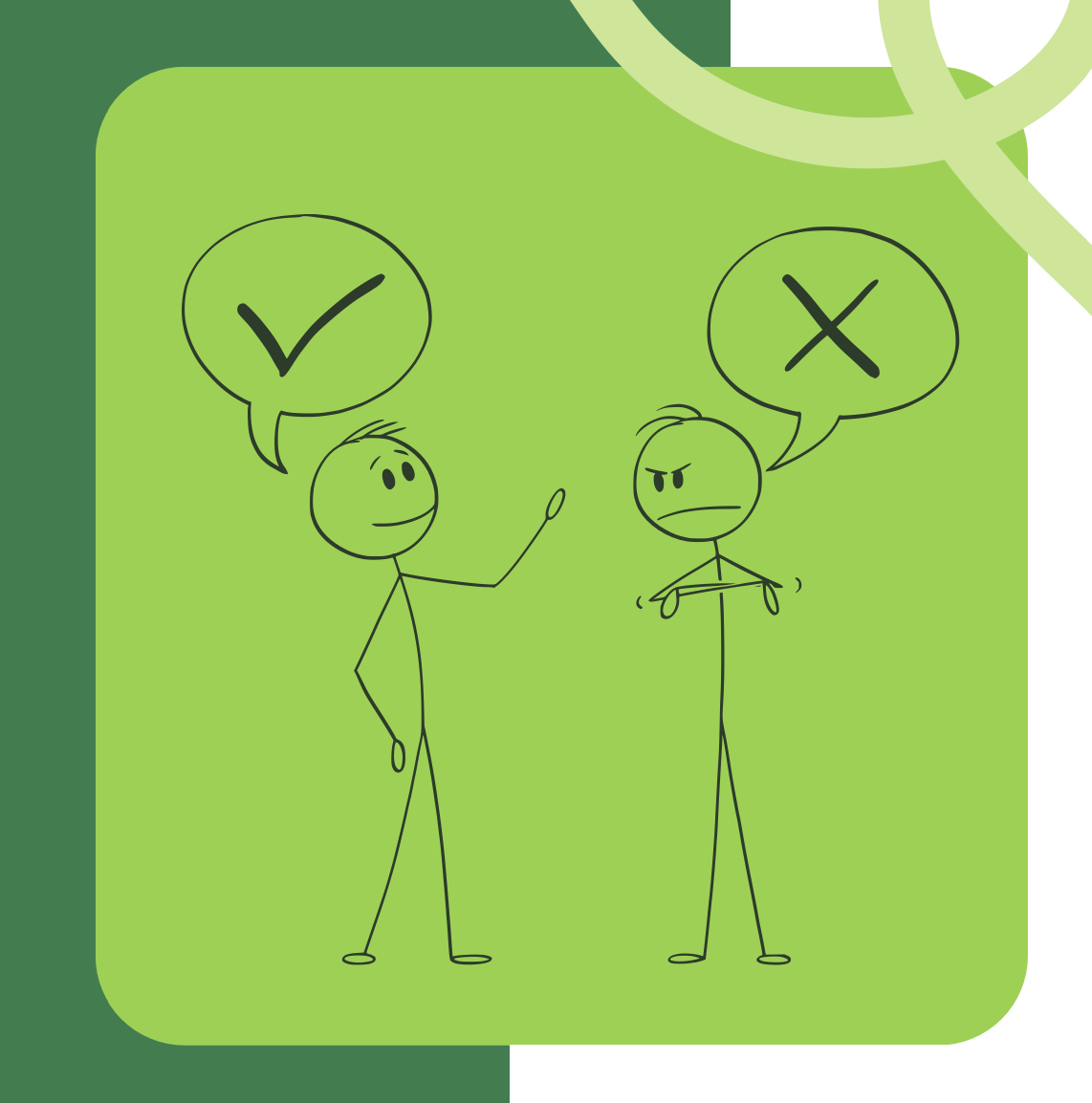
‘Happy’ and ‘Unhappy’ Humans
‘Happy’ You ‘Un-Happy’ You
These two different modes represent our brain using different pathways to navigate our environment and they have very different ways of doing so!
This is true for other humans too!
Happy Humans
Happy Humans are FAB humans to be around. As colleagues they are friendly, understanding and supportive. As visitors and guests they are polite, appreciative, kind and interested to learn and explore - even new ideas and tricky concepts.
The simple neuropsychology here is that happy humans are using the smartest, most accomodating and adaptable part of their brain to process the environment.
They are able to do this because they feel ‘safe’.
Safe, in psychological terms, means things like Welcome, included, informed, comfortable, respected, valued, heard, understood, supported & taken seriously
AND
That everything is (more or less) as they expected or needed it to be.
And that’s where things get tricky!
In neuro-psychological terms, ‘safe’ can be hard to hold onto...
And then we’ll switch into a different mode!
Un-Happy Humans
Un-Happy humans are rather more challenging to be around and that’s because they have gone from measured response to emotional reaction. They may be angry, upset, belligerant, passive aggressive, avoidant or uncooperative.
They are now in ‘fight or flight’ mode and they may very well not have noticed.
The neuropsychology here is that of threat and where there is threat the brain will instantly respond to defend.
What’s interesting here is what might have been threatening, because that very often won’t be obvious!
To make things even more challenging, the ‘threat’ doesn’t need to be real.
Perception is everything and perception is in the experience of the individual.
Threat, in psychological terms, means things like Being slighted, left out, disadvantaged or treated unfairly, judged, misunderstood or made to feel stupid.
It also happens when things are NOT as they were expected or ‘should be’ according to the values, beliefs and norms of the individual.
How does any of that help?
One unhappy human will often trigger another
And we may find ourselves sucked into a zero sum argument, or find ourselves saying - or doing - something we later regret.
We need tools that will give us the confidence to stay ‘safe’.
Unhappy Humans aren’t open to reason
Not right away anyway. In fact, trying to reason with them or persuade them that their view is an any way misguided or ‘wrong’ will likely add fuel to the fire.
To resolve the issue we will need to de-escalate first.
In this instance the tools are a little different to the norm.
They’re things like awareness, kindness and enhanced listening.
If we’d like to get a ‘happy human’ back on line we need to Meet Their Needs & Reduce The Perceived Threat.
Listen To Understand
This may very well be the last thing that you feel like doing, but it REALLY helps. Listening to understand is a powerful demonstrator of care and respect and one of the best de-escalators there is.
Meet Need. Reduce Threat.
Perspectives Will Differ
Nothing says ‘I heard and understood you’ quite like being able to rephrase the essence of the issue and the impact it has had on the other person.
You are not saying you agree, simply that you heard and understood.
Remembering that someone else may see or experience things very differently can be very helpful. Use this if you find yourself thinking ‘that’s not right’ and go back to really trying to understand what the other person is saying.
Remember - listening is not the same as agreeing. Understanding is the key to finding a way forward.
Check Understanding
Explore. Discuss. Plan.
You’d be surprised, but chatting through challenges, issues and worries as a team can make a HUGE difference to your confidence.
Being aware of likely complaints, comments and behaviours can allow you to plan for what you’d like to do when they happen.
It’s simple, but very effective.
Meet Need. Reduce Threat.
Let the small stuff go.
Every museum and collection draws a line at certain types of behaviour and will have a process for what steps need to be taken should a situation occur.
Knowing exactly what to do should you face unacceptable behaviour makes it easier to act.
Be sure to ask if anything is unclear or hasn’t been discussed.
It’s only human to be annoyed by certain questions, comments and gripes. After all, you’ve heard them 50 times already today, they’re wearing pretty thin!
The challenge here is that visitors are only doing what they typically do. In this case, it’s our expectation that they ‘should’ be doing something different that is stealing our inner calm.
Learning to let the small stuff go and re-aligning our expectations to fit better with the likely reality reduces stress and allows us to be at our best more often.
Even better? It feels great!
Know what to do.
YOU AND YOUR TEAM
A special thought for sad and distressed humans
We’ve worked with a number of clients for whom the angry visitors aren’t the problem. Instead they struggle when visitors are upset or distressed by exhibits or records, when there isn’t a problem to solve, just a LOT of emotion and uncertainty about how best to help.
It may not sound like much, but team members regularly managing distress and grief report feeling stressed, anxious and worried with many clearly carrying a weight of responsibility to ‘make it better’ that could never be in their gift.
Helping here is about being present, making time for another person in a moment of difficulty. It’s about really seeing and hearing them and holding a space for them to process.
That’s not to say this will be easy, but we hope that it might let you put down a need to ‘make it better’ and simply hold the space, one human for another.
Meet the person where they are Listen to understand. Acknowledge impact and emotion. Hold the space with kindness and a focus on their needs and dignity. Ask what they need and arrange if you are able.
Look after yourself
This is not something you need to ‘fix’ or make better.
This is a moment where simply being present, by caring and listening IS the thing that makes the difference.
If you’re worried or need help - ask.
If you find yourself carrying this person with you over a period of days please share this with your manager or a trusted colleague.
Next steps
We hope that you have found this guide interesting and that it’s got you thinking about your experiences of happy and un-happy humans.
We’ve tried to capture the essence of what a neuro-psychology based approach can do, but there is SO much more to explore.
Here are just a few thoughts about what might come next:
Share this guide with your team and chat through your experiences and thoughts. Work together as you plan new strategies and tackle problem behaviours together.
Take some time to think about the kind of behaviours and issues that you find most challenging.
What do you notice about yourself and your response?
What would you like to be able to differently and how might you make that happen?
Discover more about the fascinating world of neuropsychology with Prof. Steve Peter’s fabulous ‘The Chimp Paradox’ or ‘The Path Through The Jungle’
You can also register for our FREE on-demand programme Your Brilliant Brain and The Wild World of Work on Cademy to discover more from us.
Our tailored workshops are already helping teams at V&A Dundee and The National Museum of The Royal Navy.
Contact info@happyhumantraining.co.uk to arrange a discovery call.
Ready to Showcase Your Training Expertise?
Join our marketplace and connect with organizations actively seeking training solutions. Showcase your expertise and grow your training business with qualified leads.