
 Other
OtherAI Training Effectiveness: What Sits Between AI Literacy and AI Adoption
Key Takeaways: AI literacy is only the starting point: knowing what AI tools can do does not mean employees will use them consistently in their work. AI learnability bridges training and adoption: employees need to test AI on real tasks, evaluate the output, retry when it fails, and adapt as the tools change. Training effectiveness goes beyond completion: active usage, task-level application, repeated attempts, and workflow changes reveal what happens after the training ends. Manager support can reinforce adoption: employees are more likely to sustain AI use when their managers support experimentation and help connect it to everyday work.
Key takeaways
- Key Takeaways: AI literacy is only the starting point: knowing what AI tools can do does not mean employees will use them consistently in their work.
- AI learnability bridges training and adoption: employees need to test AI on real tasks, evaluate the output, retry when it fails, and adapt as the tools change.
- Training effectiveness goes beyond completion: active usage, task-level application, repeated attempts, and workflow changes reveal what happens after the training ends.
Written by the team at

DataCouch
Sahibzada Ajit Singh Nagar, India
About DataCouchDataCouch is a trusted enablement partner for leading technology providers including Confluent, Neo4j, Snowflake, Starburst, and Cloudera. Recognized as Confluent’s Global Education Partner of the Year for three consecutive years (2022–2024), we specialize in high-impact enablement pr
View provider profile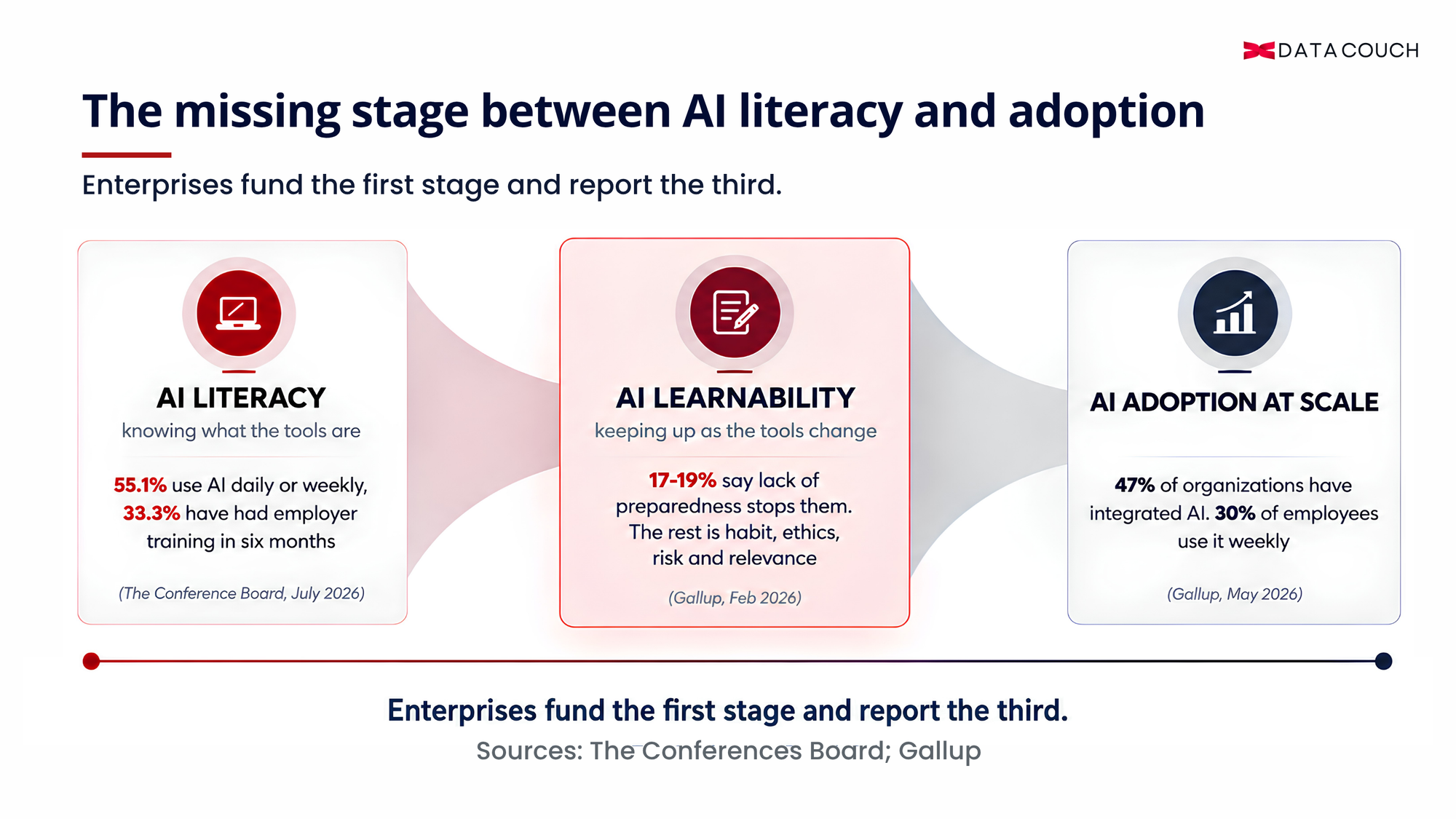
Figure 1: The AI Learnability Gap: Enterprises fund the first stage and expect the third, bypassing the bridge in the middle.
Key Takeaways:
|
Most enterprise AI programs start with a straightforward assumption: if people understand the tools, they will eventually start using them. Teach them what the tools are, show them how they work, and adoption should follow. But it does not, and AI training effectiveness is lost in the gap the assumption hides.
As of May 2026, 47% of US employees say their organization has integrated AI tools, while 30% use AI a few times a week or more. The Conference Board, surveying nearly 1,300 workers globally in July 2026, found 55.1% using generative AI or AI agents daily or weekly but only 33.3% having taken employer-provided AI training in the past six months. Deployment is ahead of training. Training, where it exists, is ahead of habit. The decisive stage sits between those three. At DataCouch, we describe this middle stage as AI learnability: the capacity to keep acquiring, testing and adapting ways of working as AI tools change.
It’s three stages, not two. AI literacy is knowing what the tools are and what they do. AI learnability is the capacity to keep acquiring, testing and discarding ways of working as the tools change underneath you. AI adoption at scale is when those ways of working persist across a team without a program attached. Enterprises fund stage one, measure stage one, and then report stage three as if it followed automatically. This distinction matters for enterprise training providers as well.
DataCouch delivers AI enablement and workforce upskilling programs, so the practical question is not whether organizations should buy more AI training. It is whether the training changes what people do after they complete it.
Stage 1: Literacy is where most programs stop
The Conference Board’s finding is blunt about what enterprise programs actually contain. Organizations emphasize AI literacy and basic prompting; far fewer help workers develop advanced capabilities such as managing AI agents, integrating AI into existing workflows, or applying AI to strategic problems. Their researcher’s summary of it is one sentence long: “AI literacy alone will not create business value.”
Timing makes the problem worse. AI tools are often introduced before employees have a clear understanding of how those tools fit into their roles. The result is predictable: people form habits around whatever they discover first, while structured training arrives later or focuses on the tool rather than the work. Most people do not need another tour of the interface. They need to know where AI fits into the work they already own, how to test it safely, and what to do when the first attempt fails.
A completion rate measures stage one and nothing else. Take the illustrative case that prompted this piece: 1,400 people trained in a quarter, 89% completion, and nobody able to say what changed. The completion number is real. It answers whether the content reached the people it was budgeted for. It cannot answer whether anyone’s work actually moved.
Basic AI literacy can often be introduced in a day, but broader AI literacy can encompass governance, responsible use, prompting, verification, model limitations, security, and role-specific application. Learnability, by contrast, is an ongoing behavior pattern that shows up in the work - or does not.
Stage 2: AI learnability, defined
AI learnability is the capacity of an employee to keep acquiring, testing, and discarding ways of working with AI tools as those tools change underneath them. Basic AI literacy can often be introduced in a day, but broader AI literacy can encompass governance, responsible use, prompting, verification, model limitations, security, and role-specific application. Learnability is a behavior pattern that shows up in the work, or does not. That is why it cannot be certified at the end of a course, and why a workforce that keeps re-skilling as the stack moves looks different from a workforce with a high certification count.
Seven behaviors make it visible:
Supplies the source instead of asking from memory. Literacy asks what notice period is standard in a SaaS agreement; learnability pastes in the actual clause. Fluency invites the first, which is why the second has to be taught.
Verifies because the output reads well, not because it looks wrong. A forty-page report summarized into six confident paragraphs, with the one caveat that mattered quietly dropped, looks exactly like a good summary.
Can tell "the tool cannot do this" from "I asked badly." No model returns an error at its capability boundary; it approximates. Someone asks for a chart, gets a description of a chart, concludes AI is useless for analysis.
Breaks a large ask into steps. The one-shot mega-prompt — "write the QBR" — is where capable new users fail most.
Treats a second attempt as normal. Same prompt, different answer is a property of the technology. People trained on deterministic software read variable output as brokenness and stop.
Knows what may not go into it, and has asked rather than guessed. No spreadsheet raises this question.
Retests what failed a few months ago. Models change without announcing it.
Together, these seven behaviors form DataCouch’s AI Learnability Framework: a practical way to examine whether training is translating into experimentation, judgment, repeated use and ultimately workflow change.
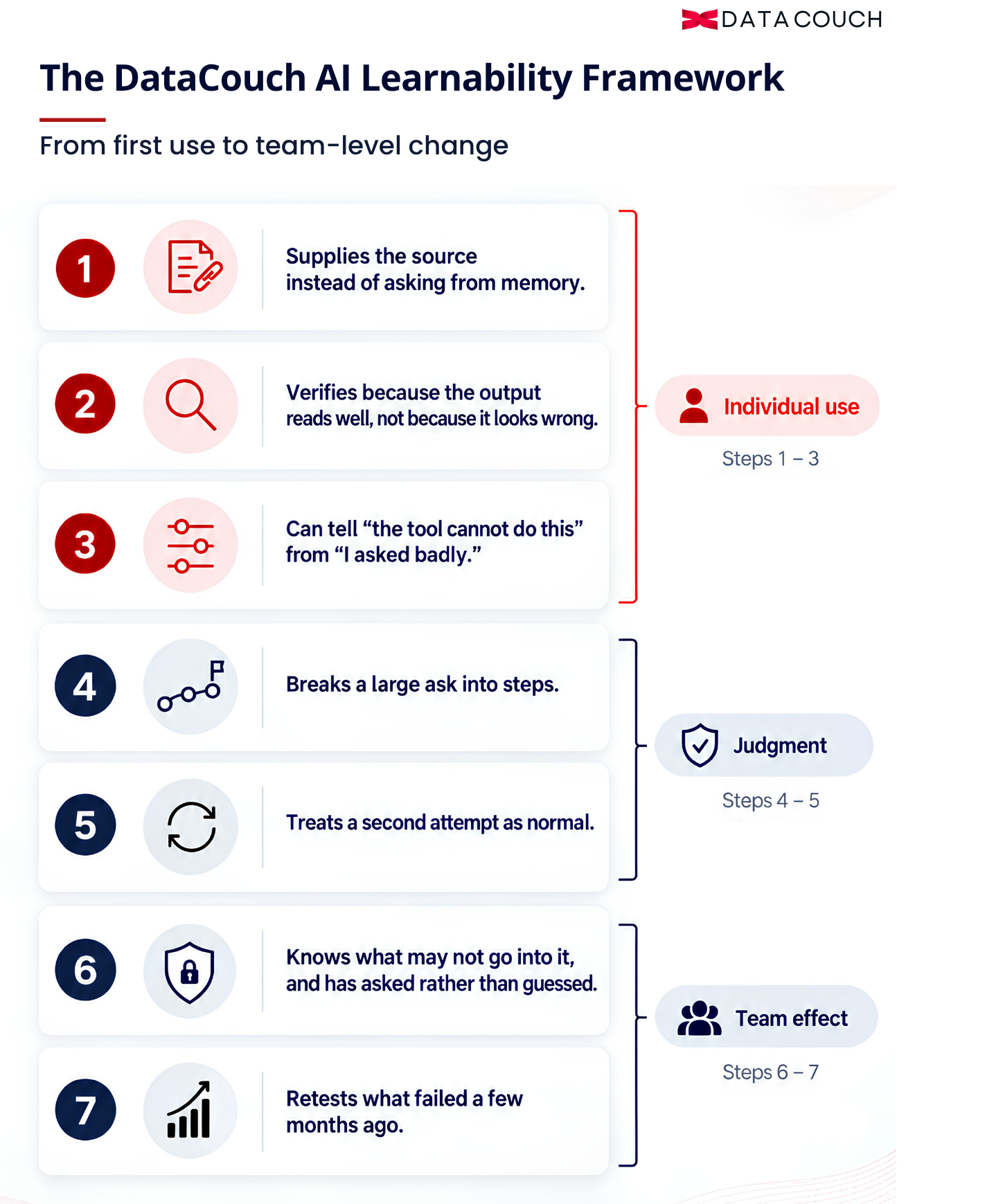
Figure 2: From first use to team-level change. Seven learnability behaviors for faster AI adoption at scale.
Now, look at what employees say is actually stopping them, and notice how little of it is a literacy problem. Gallup asked employees who use AI infrequently or not at all to select the reasons. Among non-users, 46% preferred to keep doing the work the way they do it now; 43% were ethically opposed; 43% cited data privacy, security or compliance; 39% did not believe AI could assist with their work. Among infrequent users, 27% had used AI and did not find it useful in their role.
The share who said they do not feel prepared to use AI effectively was 17% of non-users and 19% of infrequent users. Near the bottom of both lists.
Map those responses against the seven behaviors and a different set of questions emerges. ‘I prefer to keep doing my work the way I do it now’ raises questions around first use and workflow change. ‘I have used AI and do not find it useful in my role’ raises the question of whether employees experimented with different approaches before deciding the tool was not useful. And ‘I don’t believe AI can assist with the work I do’ points to the need for clearer task-level judgment about where AI does and does not fit. More content about what the tools are will not, on its own, resolve these barriers.
Stage 3: Adoption stalls at the manager layer
Gallup’s February 2026 study of 23,717 US employees tested four organizational conditions. The table below reads as: among employees in organizations that make AI tools available, the share using AI frequently — daily or a few times a week — is split by whether they strongly agree with each statement.
Statement (Gallup, Feb 2026) | Strongly agree | Do not strongly agree | Gap |
|---|---|---|---|
The AI technology provided by my organization integrates well with the existing systems and processes I use at work | 88% | 55% | 33 pts |
My manager actively supports my team’s use of AI | 78% | 44% | 34 pts |
My organization supports me experimenting with AI technology or tools | 72% | 44% | 28 pts |
My organization has clear guidelines and policies on how to use AI safely and securely | 68% | 47% | 21 pts |
Source: Gallup, 23,717 US employees, February 4–19, 2026, ±0.9 percentage points. Gap column is our arithmetic; Gallup does not publish these as a ranking.
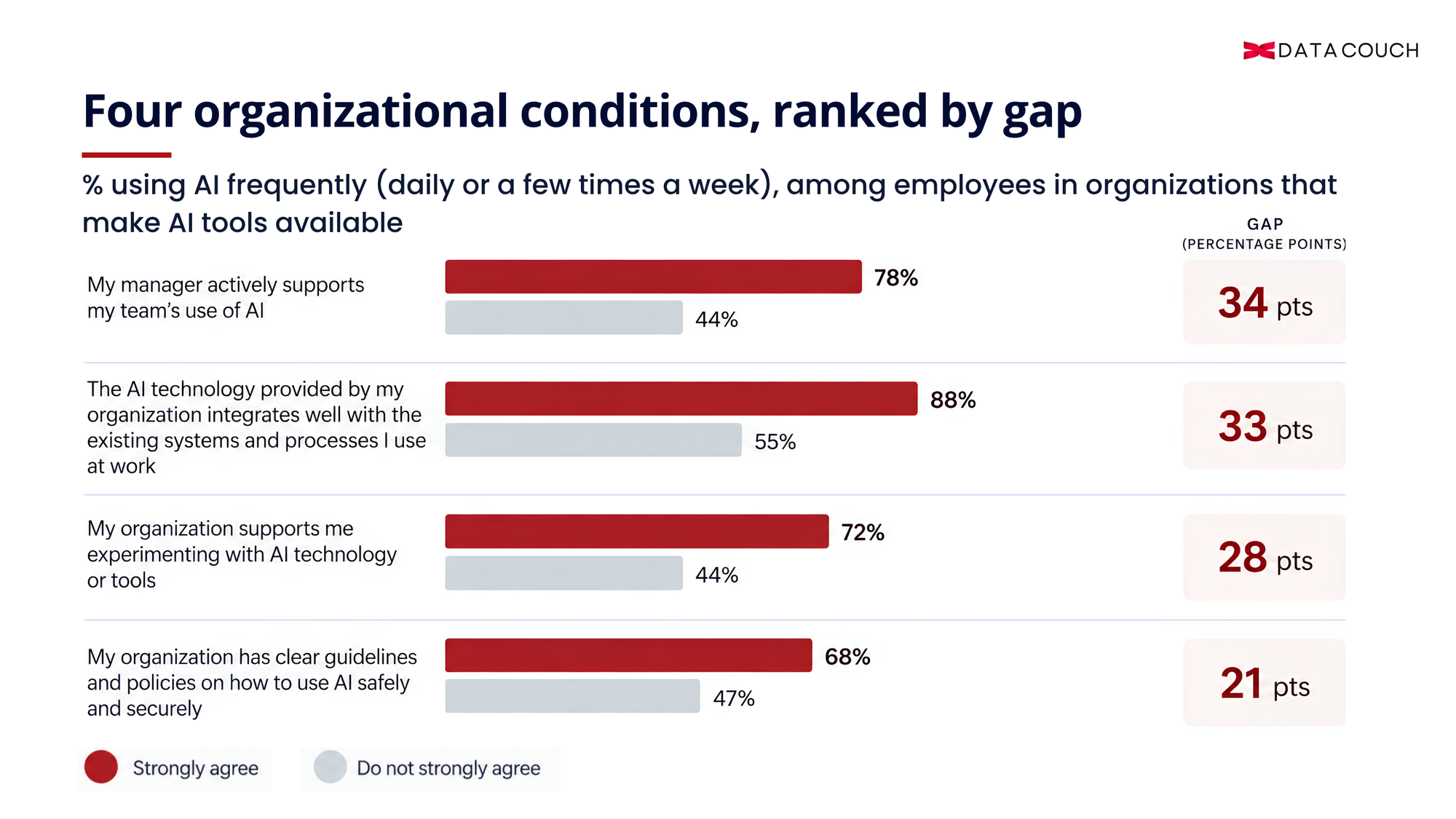
Figure 3: AI usage among employees in organizations. Four organizational conditions
Two conditions sit at the top and they belong to different owners. Workflow fit is a platform and tooling decision. Manager support is a people decision, and it is the one an enablement budget can move this quarter. Policy clarity, which is where a lot of AI governance effort lands, is associated with the smallest usage gap of the four conditions measured.
The associations with broader outcomes are stronger still. Employees who strongly agree their manager actively supports AI use are 9.3 times as likely to strongly agree that AI has transformed how work gets done in their organization, and 7.8 times as likely to say AI gives them more opportunities to do what they do best.
For organizations deciding where to investigate first, the manager layer deserves particular attention because the association is strong and reported support is relatively limited.
The layer that adopts personally but cannot scale it
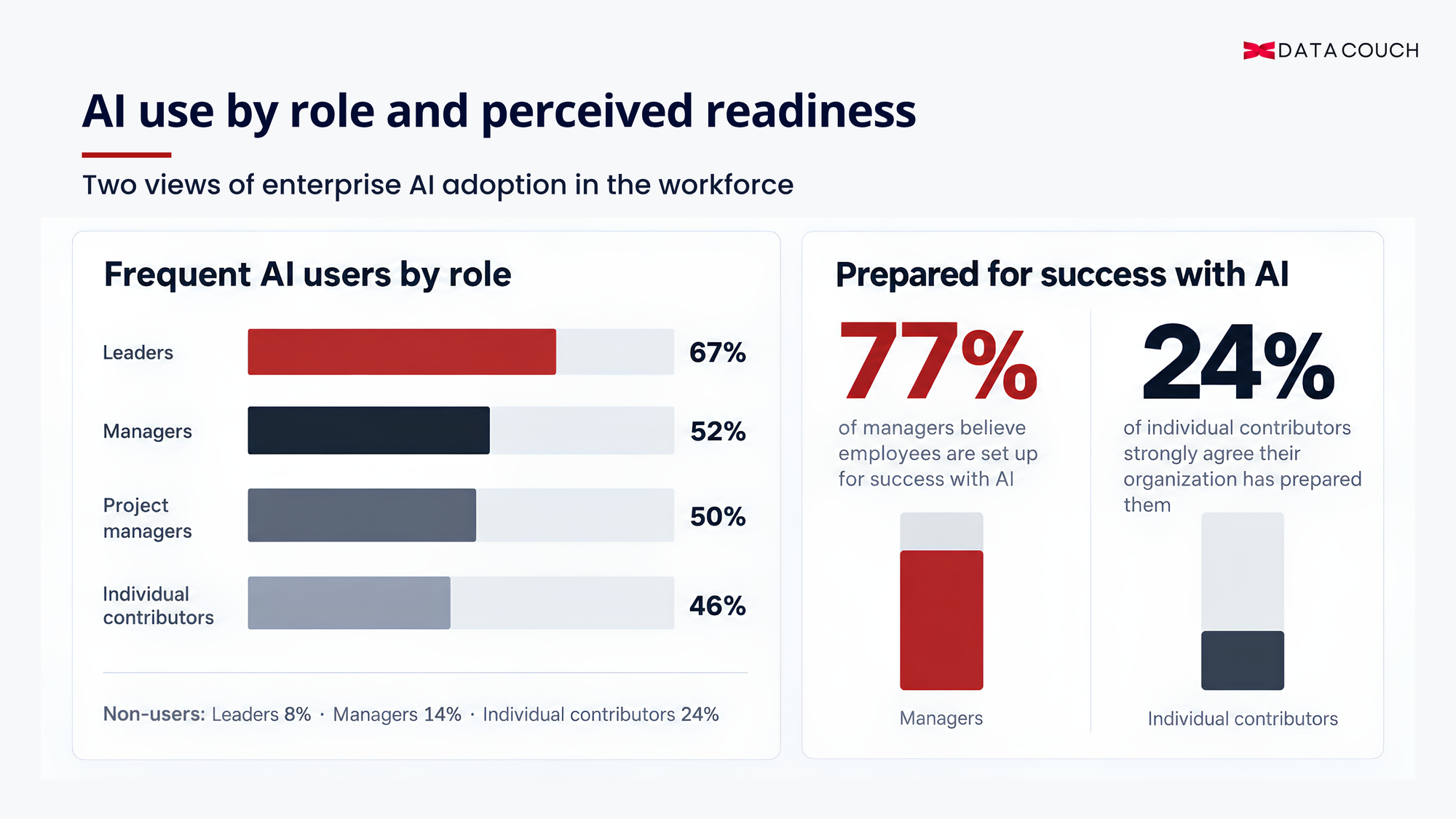
Figure 4: The sponsor is fluent. The reinforcer is not. The learner is watching the reinforcer.
In Gallup’s US sample, leaders are ahead on personal AI adoption: 67% report frequent use- compared to . This suggests that senior leaders may be considerably more familiar with AI than some of the employees they are asking to adopt it. Here is the part that explains why this keeps happening. Gallup’s role-level data put frequent AI use at 67% for leaders, 52% for managers, 50% for project managers and 46% for individual contributors. Non-use runs the other way: 8% of leaders, 14% of managers, 24% of individual contributors.
Executives have adopted. Two-thirds of them use AI weekly or more, which means the sponsor of the enablement program is usually fluent in the thing being rolled out. That fluency is exactly what makes the scaling problem invisible to them, because personal adoption and team adoption are different problems and only one of them is solved by being good at the tool.
The manager gap is visible from another angle. Gallup's August 2026 survey of 102 CHROs found that 50% were not confident in their managers' ability to guide employees on using AI at work, while 57% said their organizations were providing AI training for people managers.
That matters because the manager is often the person employees look to after the formal training ends. A course can show someone how to use AI. The manager determines whether that person gets the opportunity, encouragement, and context to use it on real work.
And on the supply side, as of May 2026 only 36% of employees in AI-integrating organizations strongly agree their manager actively supports their team’s use of AI. Roughly two-thirds of the workforce does not have the condition most closely associated with adoption, in organizations whose leaders are mostly using AI themselves and mostly believe the job is done.
Think of it the way a plant manager thinks about a new lockout procedure. Everyone certifies. The certification is real, the test is real, the records are clean. Then the shift supervisor keeps doing it the old way because the new way adds four minutes, and within a month the procedure exists on paper and nowhere else. Nobody forgot the training. They simply read the room and went back to the old way of working.
None of this proves manager support causes adoption. These are cross-sectional data, so the arrow could run the other way: managers of teams that already use AI well may find it easier to say they support it. But it does not really change the practical question. If you spend on one layer first, spend on the layer where the association is strongest and current coverage is thinnest, which happens to be the same layer on both counts.
Measuring AI training effectiveness at each stage
Completion stays. Report it as the stage-one delivery metric it is, next to four numbers that measure the other two stages.
Tool telemetry for the trained cohort, at 30 and 90 days. Active users as a share of trained users, and how that ratio moves. It comes from the tool’s own admin console, not from a survey.
Task-level application, sampled. Pick 20 people from the cohort and ask what they last used AI for and what they did with the output. Twenty real answers beat a whole-population survey that most of the population ignores.
Second-attempt rate. Of the people who tried AI on a task and got a poor result, how many tried again differently. This is behavior 3, and it is the single cheapest learnability signal to collect, because it comes out of the same 20 conversations.
Manager support, measured as the employee experiences it. Gallup’s item works as written: my manager actively supports my team’s use of AI, scored on strong agreement rather than a mean. Run it on the team, not on the manager.
Send all five numbers together when reporting upward. Completion on its own invites the question an L&D leader currently cannot answer; the other four are what answer it.
Sequence the managers one cohort ahead
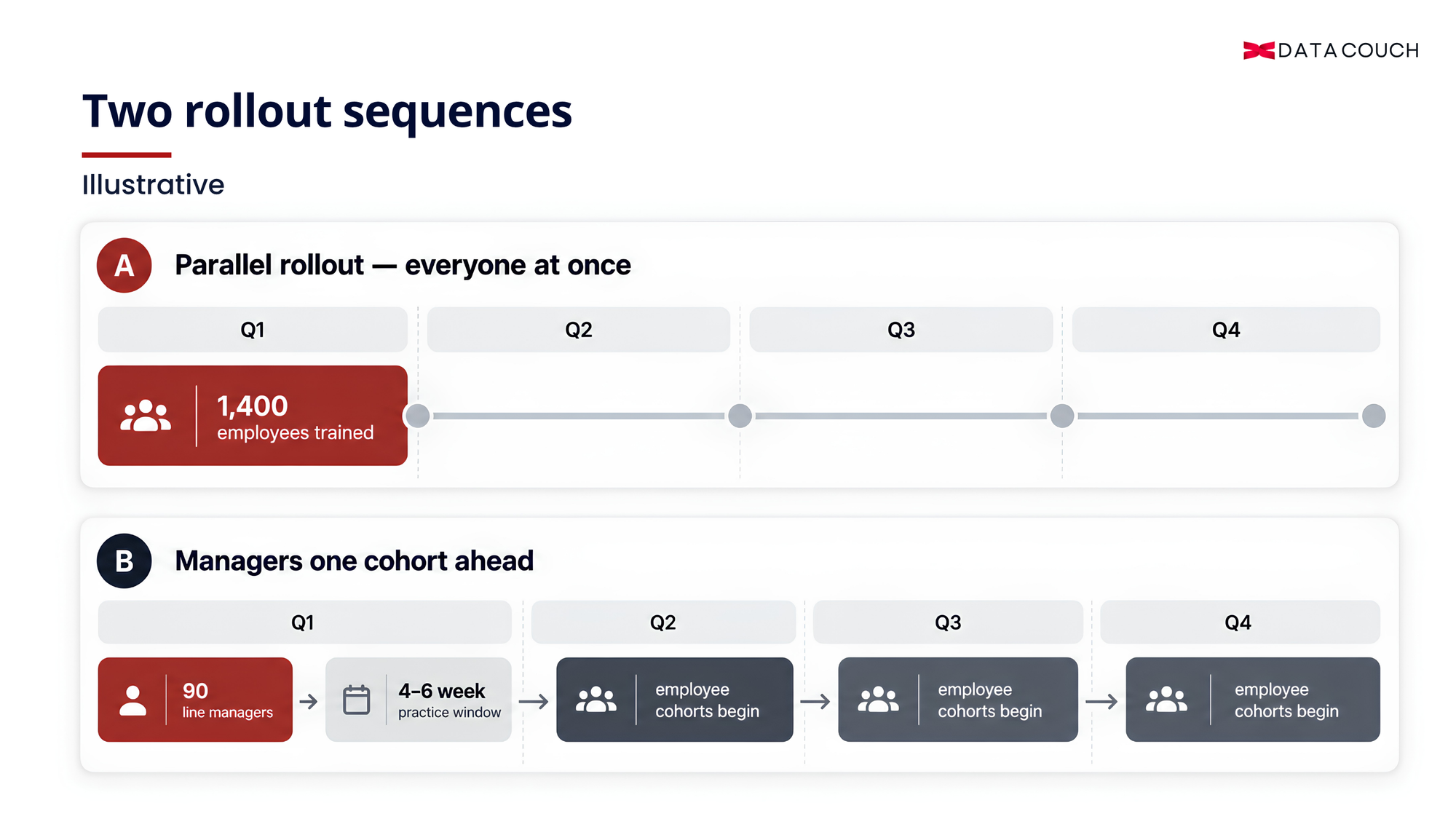
Figure 5: Illustrative comparison of two rollout sequences
Take a hypothetical claims operation of 1,400 people. Standard rollout trains everyone inside a quarter, in role-mixed cohorts, and measures completion. Six months on, telemetry shows 300 monthly active users and the renewal conversation is difficult.
Run it the other way. Take the 90 line managers first and train them on three things: the two or three AI use cases that exist inside their team’s actual workload, how to tell a good output from a plausible one in that domain, and what they will say in a one-on-one when someone says they tried it and it did not work. Give them four to six weeks to use it on their own tasks. Then start the employee cohorts under managers who have already been through it.
Sequencing is the intervention here. Roughly a quarter of delay, in exchange for changing what the employee walks back into: the one variable in this system that no employee cohort can fix for itself. Over a longer horizon it is the same work as building a learning culture that holds without a program attached to it.
Where to start
Pick one team of 30 to 80 people that already has AI tools licensed. Establish its 30-day active-user ratio, run the Gallup manager-support item on the team, and hold both numbers side by side. You can do that in about a week, without bringing in a vendor. Where manager support comes back low, reinforcement is the next purchase, not more content.
DataCouch builds role-based AI enablement around the same principles described in this article: task-level use-case mapping, manager and champion enablement, practice on real work, and adoption measurement beyond course completion.
CTA Block:
Heading: Move from AI training to AI adoption Subheading: Datacouch provides teams practical, role-based AI training built around the work they actually do and not just the tools they need to know. Button text: Explore Generative AI Coaching Services → |
Talk to DataCouch about mapping one team’s work from AI literacy to sustained adoption.
Sources current as of September 2026. Gallup figures describe US employees; The Conference Board’s are global; Skillsoft’s cover managers and individual contributors across its survey panel. None transfers automatically to a single market or sector.
Ready to grow your training business?
List your courses on our marketplace and reach corporate buyers.


